Rome Wedding Locations: A Wedding Videographer’s Guide to Getting Married in the Eternal City
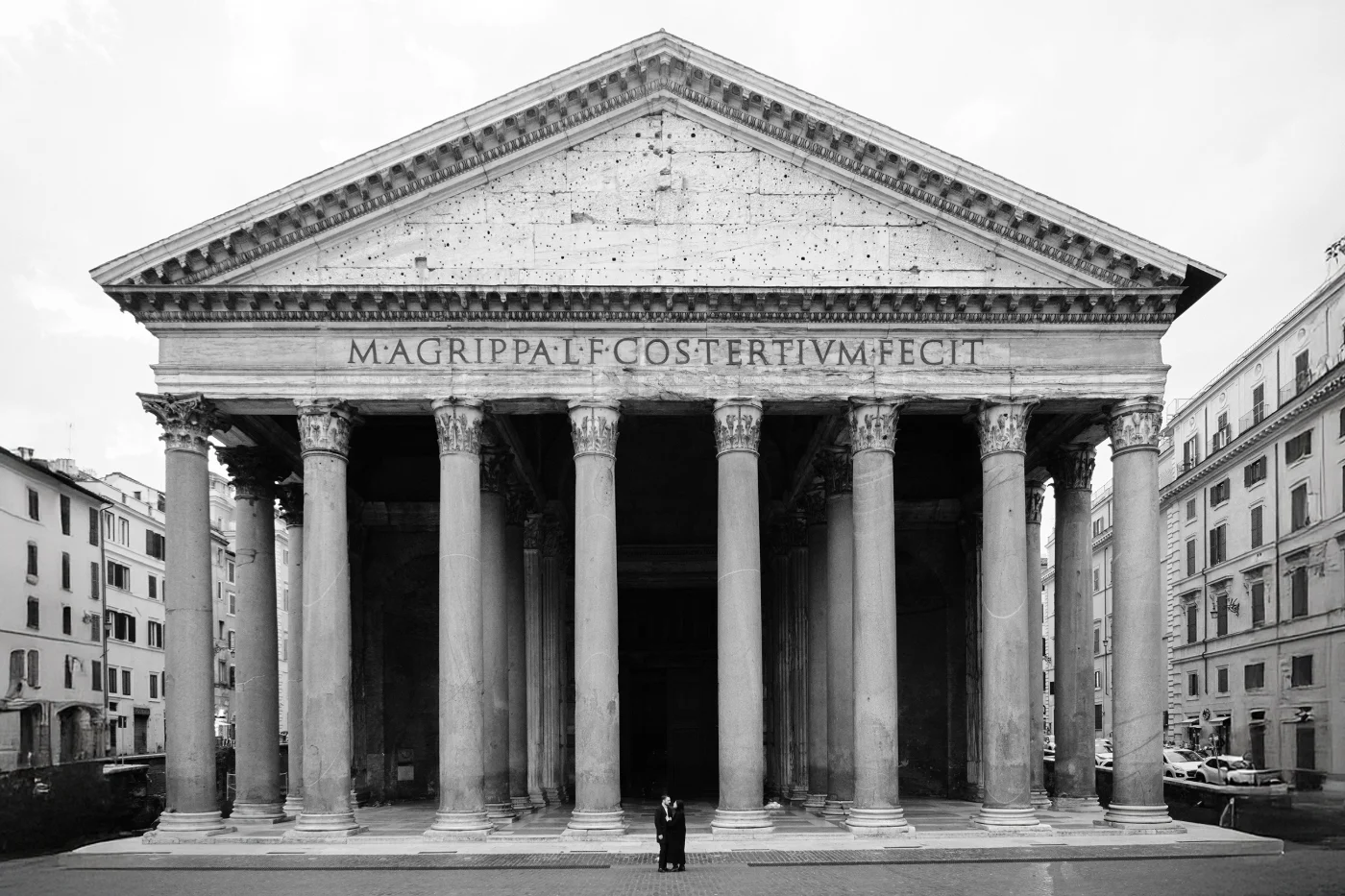
Rome is one of Italy’s most cinematic wedding destinations, a city where golden light, centuries of history and effortless access for international guests come together in a single frame.
The best time to marry here is spring or autumn, when the light is soft and the crowds thinner, and couples can choose from historic villas, panoramic rooftops, civil-ceremony landmarks, and centuries-old churches.
Seen through the eyes of someone who films weddings for a living, Rome isn’t just beautiful—it’s a place that knows how to tell a story.
In this guide
Key takeaways
- Best seasons for filming: late spring (May–June) and early autumn (September–October) offer the softest natural light and the most comfortable temperatures for you and your guests.
- Four main venue types: historic villas and estates, rooftop and panoramic venues, civil-ceremony locations, and churches for religious ceremonies.
- Ceremony options: Rome accommodates civil, religious, and symbolic ceremonies, including legal weddings for foreign couples.
- Filming logistics matter: natural light, drone permissions, and ceremony acoustics all shape how your wedding film will look and sound, and they’re worth considering before you sign with a venue.
- Drone filming is possible but regulated: aerial footage requires venue permission and, in Rome’s restricted airspace zones, additional authorizations.
Why couples choose Rome for a destination wedding
Couples choose Rome for reasons that go far beyond its reputation. When you’re planning a destination wedding, the setting has to do real work: it has to feel unforgettable to your guests, translate beautifully on film, and be practical enough that people can actually get there.
And Rome delivers on all three.
A cinematic backdrop unlike anywhere else
There’s a reason Rome has been a backdrop for filmmakers for over a century. The city has a density of beauty that’s hard to find anywhere else: honey-colored stone that glows at golden hour, ancient architecture around nearly every corner, and a quality of light that photographers and videographers travel across the world to capture.
For your wedding film, this means the city itself becomes part of the story. A couple walking through a quiet piazza at dawn, the dome of a basilica behind an exchange of vows, the warm reflection of stone during a rooftop reception—these are images that need no set design. Rome provides them naturally.
Easy to reach for international guests
A destination wedding only works if your guests can reach it. Rome is served by two airports, including one of Italy’s largest international hubs, with direct connections to most major cities in Europe, North America, and beyond. That accessibility matters: it lowers the barrier for guests traveling from abroad and makes it more likely that the people who matter most will be there on the day.
It’s the reason a couple like Sara & Max could split their love story between two cities: a London pre-wedding session followed by a bilingual wedding day in Rome, with guests flying in from both sides of their world to be there.
Once they arrive, guests find a city built for hospitality, with abundant accommodation across every budget, walkable historic neighborhoods, and enough to see and do that your wedding can easily become the centerpiece of a longer trip.
The best time of year to get married in Rome
Without a doubt, the best months to get married in Rome are May, June, September, and early October. These windows offer warm but comfortable temperatures, long hours of soft natural light, and a lower density of tourists than the peak summer weeks.
For a wedding film, the season you choose has a direct effect on how your footage looks.
Spring and autumn light for filming
Light is everything in videography, and Rome’s light changes character through the year.
In late spring and early autumn, the sun sits lower in the sky and the light stays soft and directional for longer stretches of the day. This is the light that flatters faces, adds depth to wide shots of the city, and gives golden-hour footage its warmth without the harsh contrast of high summer.
These seasons also give a filmmaker more flexibility. Ceremonies and portrait sessions can be scheduled to catch the best light without fighting the midday glare, and outdoor receptions hold their atmosphere as the evening cools.
What to expect in peak summer
July and August are the hottest and busiest months in Rome. The light at midday is bright and hard, temperatures regularly climb, and the most famous locations fill with tourists.
None of this makes a summer wedding impossible—many beautiful films are shot in high summer—but it does require planning. Early-morning and late-evening filming becomes more important, shade and hydration matter for guest comfort, and popular outdoor spots need to be timed carefully to avoid crowds.
Types of wedding venues in Rome
Rome offers four broad categories of wedding venue, each with a distinct atmosphere and its own implications for how your day will be filmed.
This section stays at the level of venue types—for a more detailed look at specific, named locations, see my dedicated guide to the best wedding venues in Rome.
Historic villas and estates
Rome’s historic villas are among the most sought-after wedding venues in Italy.
These are properties with formal gardens, panoramic terraces, and interiors rich in period detail, settings that offer a filmmaker generous space and a natural sense of grandeur.
They tend to suit larger, more formal celebrations, and their layered architecture gives a film visual variety, from intimate garden corners to sweeping establishing shots.
Rooftop and panoramic venues
For couples who want Rome itself in the frame, rooftop and panoramic venues are hard to beat.
A terrace overlooking the city skyline, with domes and rooftops stretching to the horizon, creates images that are unmistakably Roman. These venues are especially striking at golden hour and after dark, when the city lights become part of the backdrop.
Civil ceremony locations
Rome offers several settings for legally recognized civil ceremonies, including historic municipal locations and monumental sites. These are an excellent choice for couples who want a legal wedding in a meaningful setting without a religious service.
Civil ceremonies also tend to be more flexible in structure, which often makes for spontaneous, emotionally direct footage.
Churches and religious ceremony venues
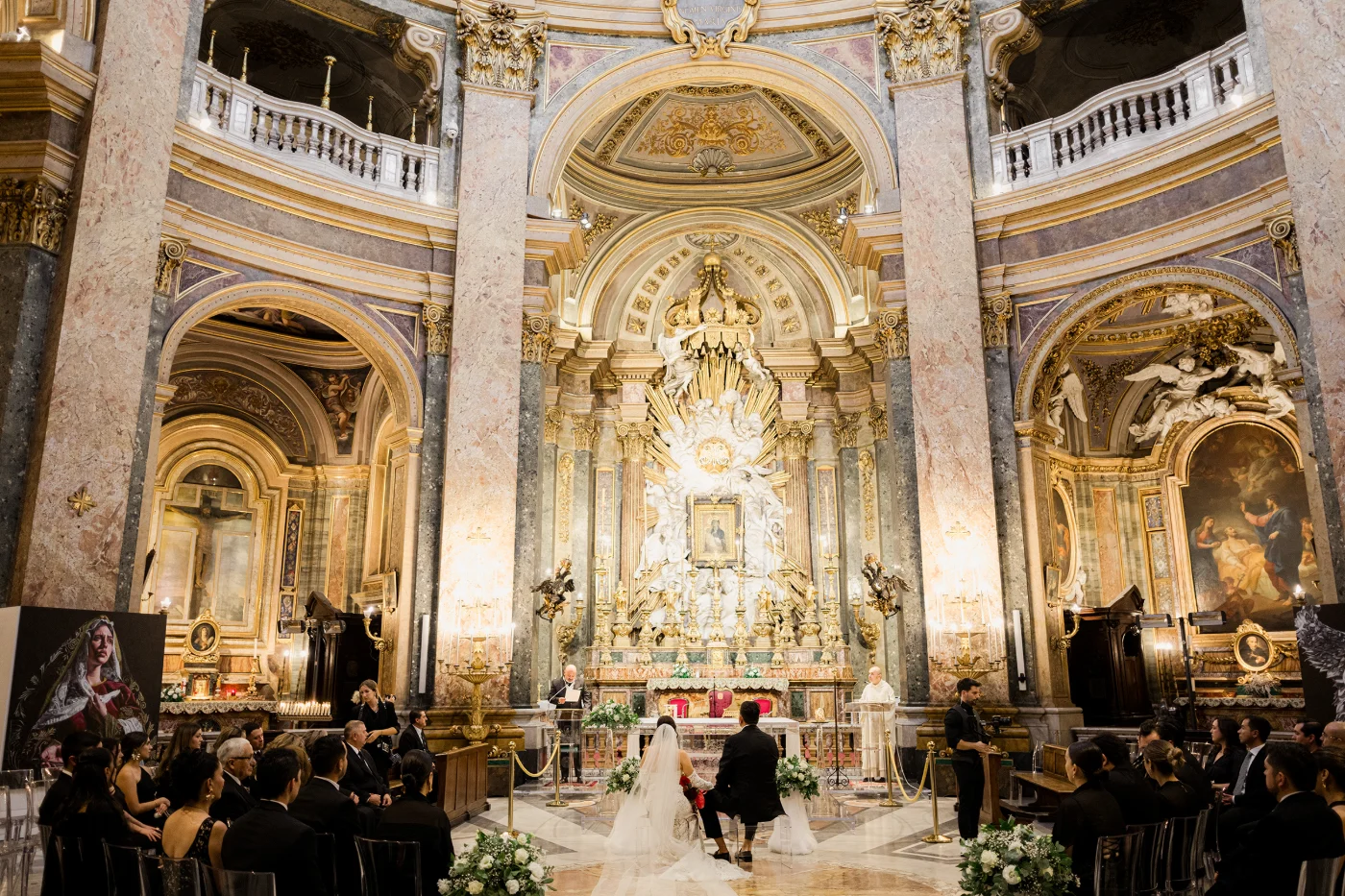
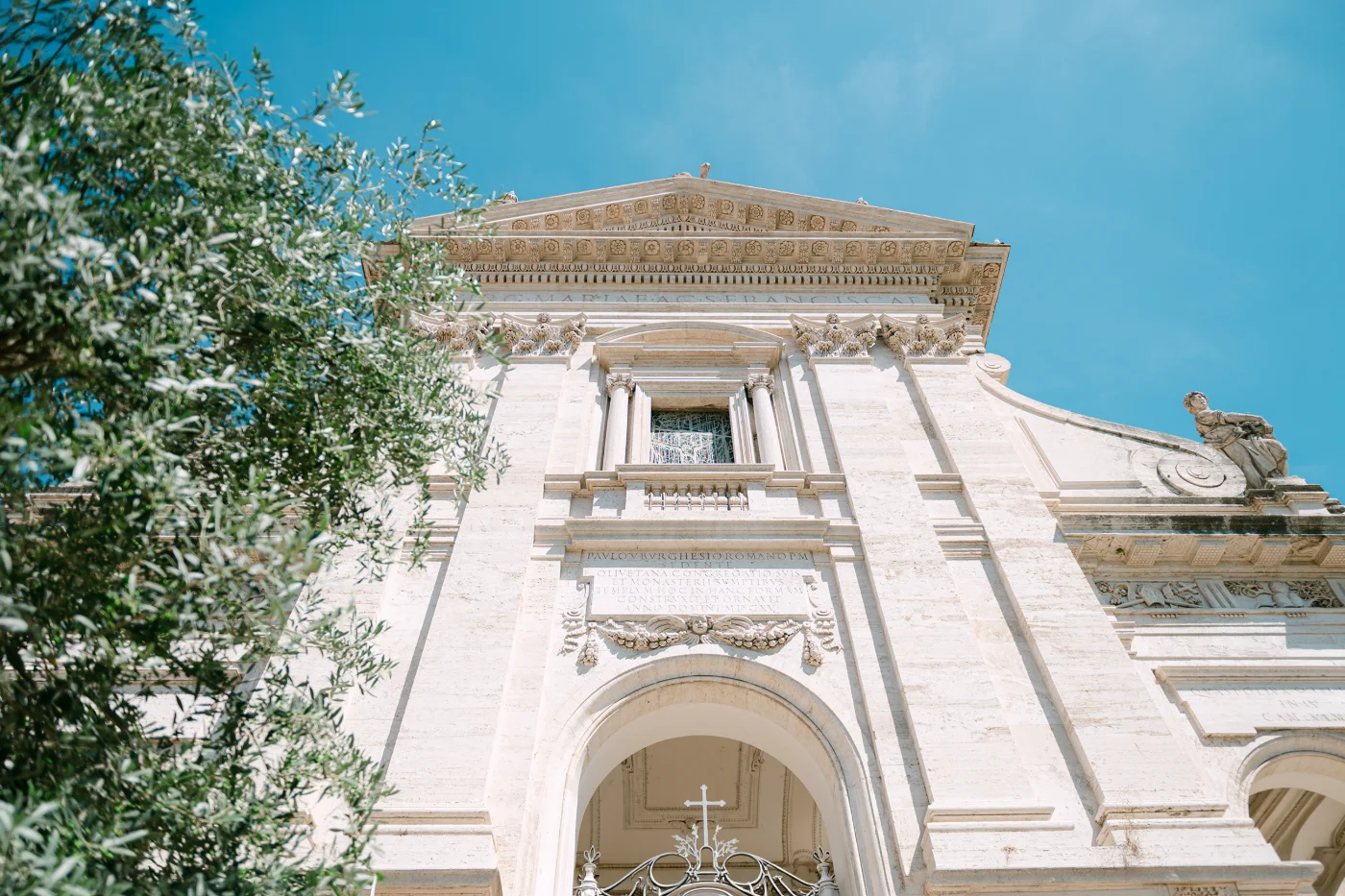
For couples planning a religious wedding, Rome’s churches range from grand basilicas to small, centuries-old chapels tucked into the historic center. Each has its own character, its own acoustics, and its own rules regarding filming.
A religious ceremony carries a particular gravity on film (the architecture, the ritual, the sound) and choosing the right space shapes the emotional tone of that part of your story.
What to consider before choosing a venue (from a filmmaker’s perspective)
Most venue guides are written from the point of view of a planner or a directory. This one isn’t. When I look at a venue, I’m thinking about how it will actually film: how the light moves through it, whether I can capture it from the air, and how sound will behave during your vows.
These are the practical considerations that shape the final film, and they’re worth thinking about before you commit.
Natural light and filming logistics
The way light enters a space determines how a film looks.
Before choosing a venue, it’s worth understanding where the sun sits at the time of day your ceremony and reception will take place. South-facing terraces flood with light; enclosed courtyards can fall into shadow; interiors with large windows behave very differently at noon than at dusk.
A venue that’s stunning in a photograph at one hour can be challenging to film at another, so timing your key moments to the light is one of the most important planning decisions you’ll make.
Drone and aerial filming permissions
Aerial footage can transform a wedding film, placing your celebration within the wider landscape of Rome. But drone filming is regulated, and much of central Rome falls within restricted airspace.
Whether a drone can fly at your venue depends on the location, the proximity to protected sites and flight paths, and the venue’s own policies. If aerial footage matters to you, raise it early—both with your venue and your videographer—so the necessary permissions can be arranged in advance.
Acoustics for ceremony sound
Sound is half of any wedding film, and it’s the half couples tend to forget.
The vows, the readings, the ambient life of the day: these are what make a film feel true years later. Different venues present different acoustic challenges: an open terrace competes with wind and city noise, a stone church carries echo, a garden absorbs sound entirely. Understanding how a space sounds, and planning for it, is essential to capturing ceremony audio that holds up.
Getting married in Rome: permits and practical considerations
Getting legally married in Rome is entirely possible for both Italian and foreign couples, but the process involves paperwork that varies depending on your nationality and the type of ceremony you choose.
Civil ceremonies are legally binding and available to foreign couples, though they require specific documentation, typically including a declaration of intention to marry and, for many nationalities, a document confirming there’s no impediment to the marriage. Religious ceremonies may or may not carry legal recognition depending on the arrangement, and symbolic ceremonies carry no legal weight but offer complete freedom in format and setting.
The documentation process takes time and benefits from local guidance, which is why many international couples work with a wedding planner familiar with Roman bureaucracy. The requirements are manageable, but they’re best started well in advance. (A dedicated guide to the legal process for foreign couples getting married in Rome is coming soon.)
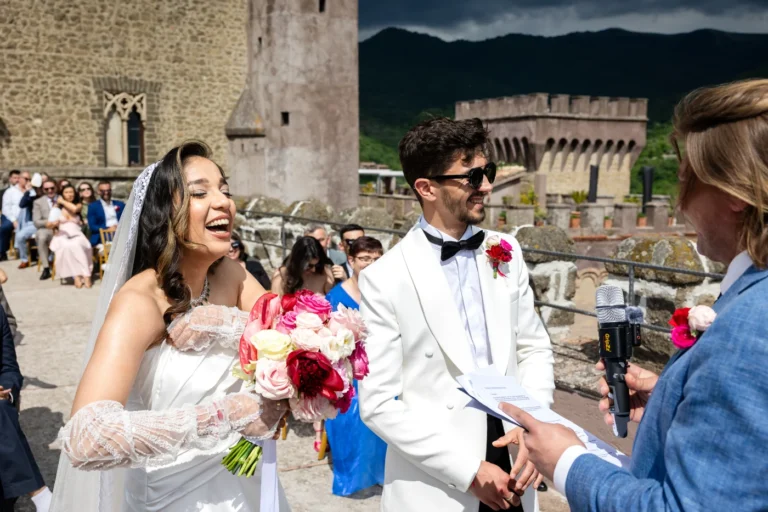
Giulia and Rostic chose a place near Rome, Terracina at La Librata, to celebrate their love.
Choosing a wedding videographer for your Rome wedding
Once you’ve settled on Rome, the person you choose to film it will shape how you remember it.
A wedding videographer isn’t just documenting the day, they’re deciding what to notice, how to listen, and which moments become the ones you return to. In a city as visually rich as Rome, that editorial eye matters more than ever: the goal isn’t to let the city overwhelm your story, but to let it serve it.
Look for someone whose existing work moves you, whose approach to light and sound matches the kind of film you want, and who understands the practical realities of filming in Rome specifically. The right videographer will already be thinking about the things covered in this guide before you even ask.
If you’re planning a wedding in Rome, I’d love to show you how I’d approach yours. You can explore my films shot in Rome to see how I work, or check availability for your date to start the conversation.
Frequently asked questions
What is the best month to get married in Rome?
The best months are generally May, June, September, and early October. These periods offer warm but comfortable weather, soft natural light that’s ideal for filming, and fewer tourists than the peak summer months of July and August.
Do I need a permit to film with a drone at my wedding venue in Rome?
In most cases, yes. Drone filming in Italy is regulated, and much of central Rome falls within restricted airspace due to its proximity to protected sites and flight paths. Permission from the venue is required, and additional authorizations may be needed depending on the location. It’s best to confirm this early with both your venue and your videographer.
Can foreigners have a legal wedding ceremony in Rome?
Yes. Foreign couples can have a legally binding civil ceremony in Rome, provided they supply the required documentation, which typically includes a declaration of intention to marry and proof that there’s no legal impediment to the marriage. The exact requirements vary by nationality, so it’s worth starting the process early and seeking local guidance.
How much does a wedding videographer cost in Rome?
The cost depends on the scale of your wedding, the coverage you need, and the type of film you’re after: a single-day celebration and a multi-day destination wedding with a pre-wedding shoot are very different projects. Rather than a fixed price, the best approach is a short conversation about your day, which allows for an accurate, personalized quote. Feel free to get in touch to discuss what you have in mind.
How far in advance should I book a wedding videographer in Rome?
For peak-season dates (spring and autumn), it’s wise to book as far ahead as possible, often eight to twelve months in advance, sometimes more for the most in-demand dates. Popular videographers take a limited number of weddings each year, so reaching out early gives you the best chance of securing your date.