Why Villa Miani Is One of Rome’s Best Wedding Venues (A Wedding Videographer’s Perspective)
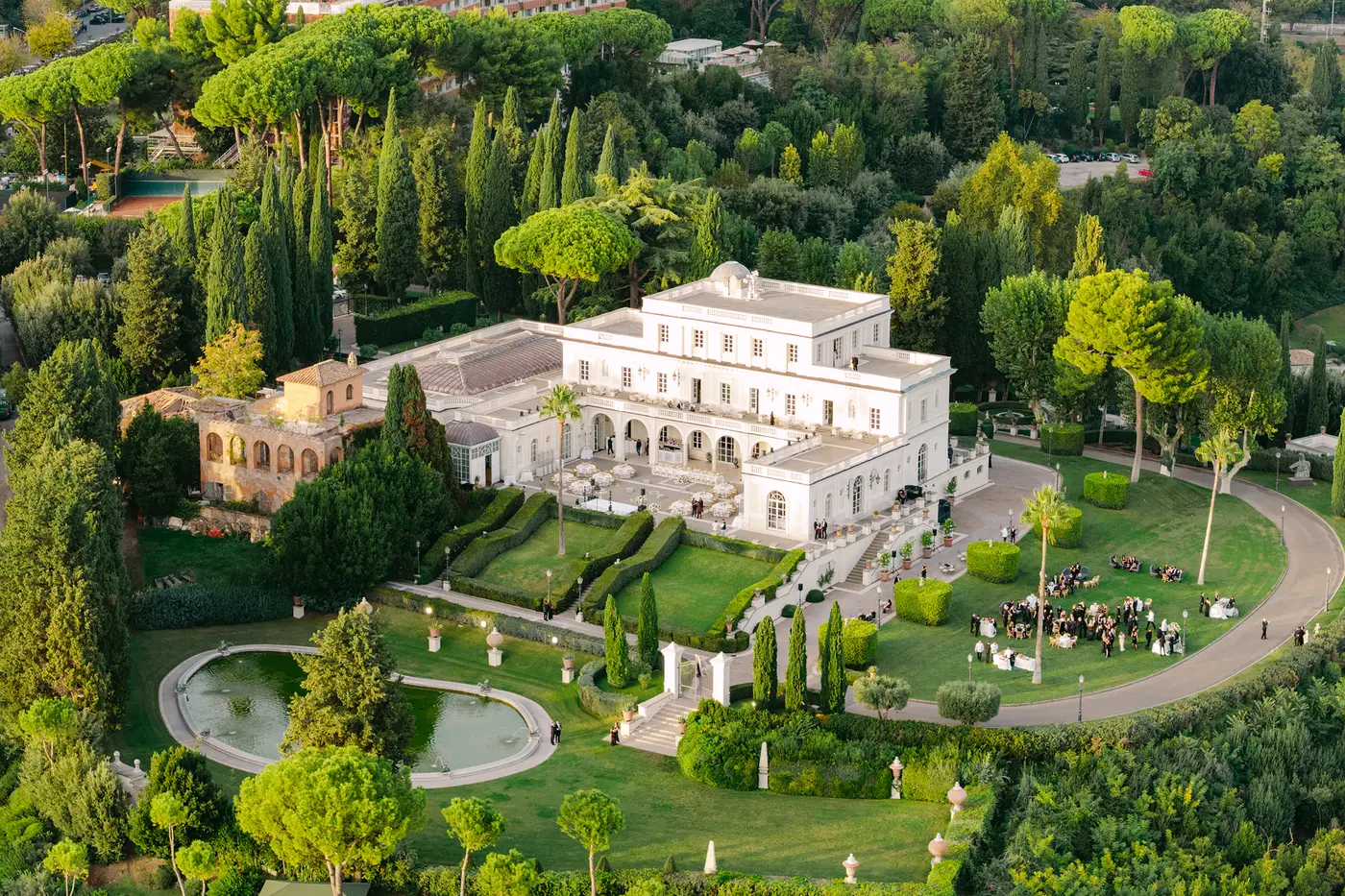
Villa Miani is a wedding venue set on Monte Mario, the highest hill in Rome, with a garden that looks out over the entire city.
It’s a place I’d wanted to film for a long time, and after my first wedding here, I’m already looking forward to coming back. And when I think about a venue, I do it differently than a wedding planner or a guest would: I’m thinking about light, sound, and how the day will actually cut together.
So what follows isn’t a brochure — it’s a first-hand account of what Villa Miani is really like to film.
In this guide
Key Takeaways
- The garden overlooks a sweeping view of Rome, which serves as the backdrop for the entire celebration.
- The light is the thing to plan around: on an open hilltop it’s generous, but in the autumn and winter months it fades early, so the timeline has to be built around sunset.
- In the wedding I filmed, the ceremony was held indoors and ran short, which is worth knowing when you plan your coverage.
- Monte Mario sits inside Rome’s controlled airspace, so drone footage depends on authorizations that have to be arranged in advance.
- Almost the entire day can happen in one place, which keeps the film’s rhythm intact and saves time for everyone.
Villa Miani at a Glance
Here are the essentials, from a filming point of view. Villa Miani sits on Monte Mario, a short drive from central Rome, with large frescoed indoor halls, a garden that overlooks the city, and a second, more enclosed garden in front of the villa used for portraits.
- Location: Monte Mario, Rome
- Indoor spaces: several large frescoed halls
- Outdoor spaces: a panoramic garden over the city, plus an enclosed garden in front of the villa
- Seated capacity: to confirm directly with the villa
- Ceremony types available (civil / symbolic / outdoor): to confirm directly with the villa
- Best seasons for filming: late spring (May–June) and early autumn (September–early October)
Arriving at Villa Miani
The arrival sets the tone before the day even begins.
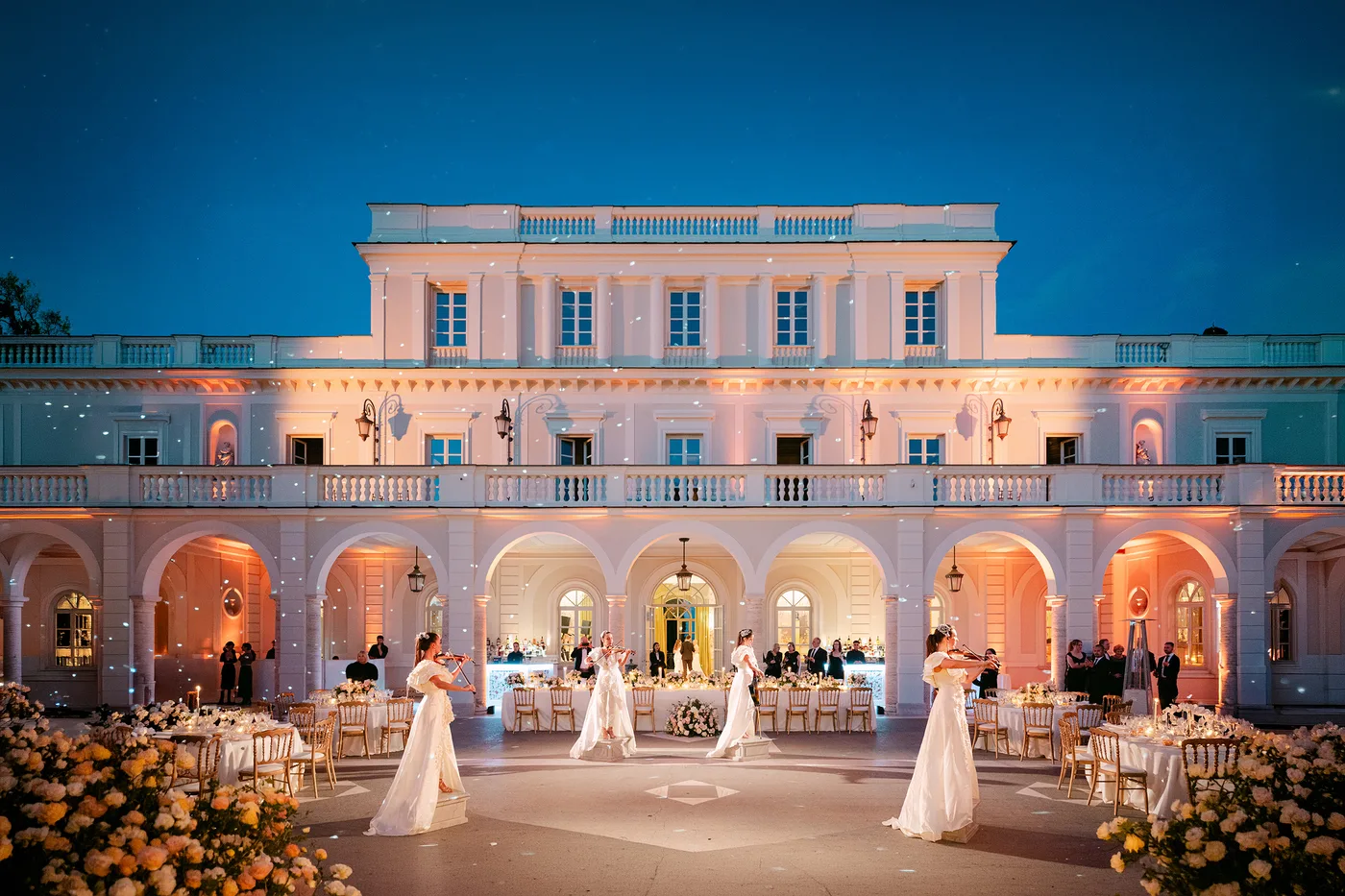
The entrance is tucked along one of Rome’s panoramic climbs — high gates, white walls, and a zigzag driveway that carries you up to the parking area. The first impression is one of real care, and that carries through everything that follows.
For guests and suppliers, that approach matters in practical ways too. The climb and the discreet entrance mean it’s worth sending clear directions in advance, and worth checking supplier access and parking arrangements with the villa so that equipment can be brought in without slowing the morning down.
Why Villa Miani Works as a Wedding Venue
Villa Miani works as a wedding venue because it is beautiful and practical at the same time.
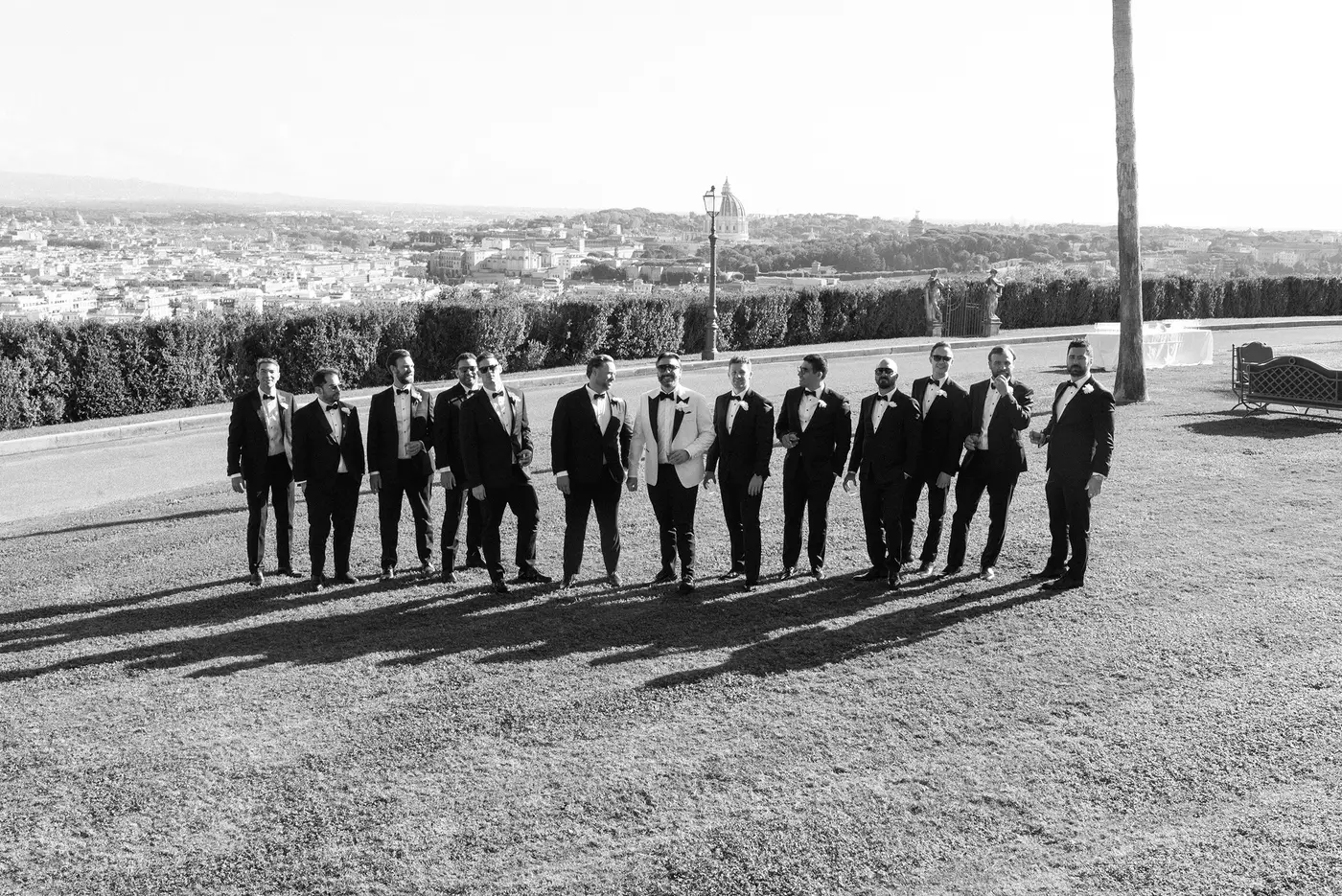
Its strongest feature is undoubtedly the view: from the garden, you can see all of Rome, a panorama so vast that it encompasses the entire city. For a film, a backdrop like that does a lot of the work on its own — the city is simply present behind the celebration, with no need to travel to a monument to prove where you are.
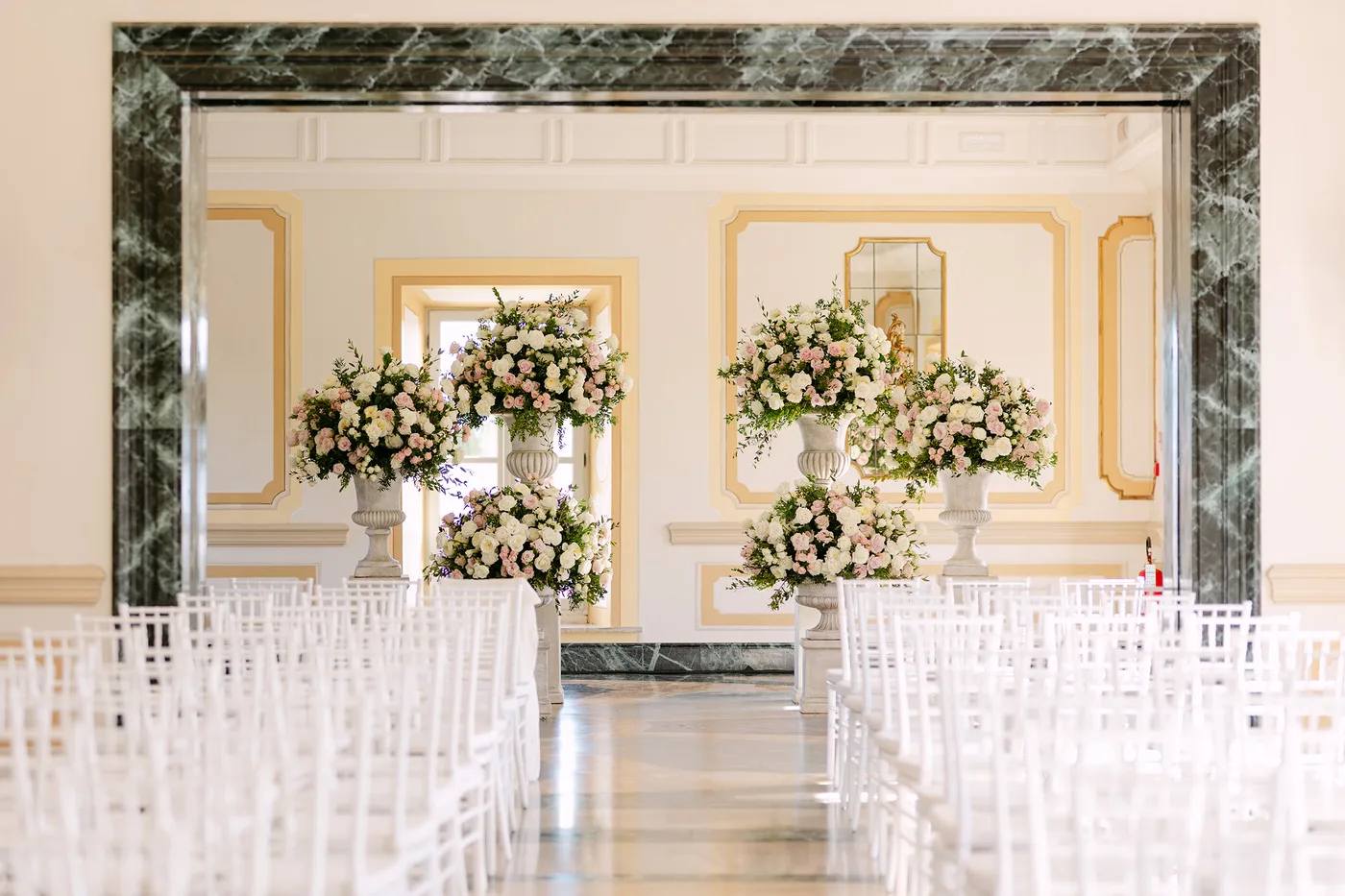
Inside, the villa feels remarkably bright and open. The clean white walls and vast frescoed halls bounce natural light beautifully onto people’s faces, giving the spaces a fresh, modern, and purely elegant aesthetic that is a joy to film.
The other advantage is less obvious but just as important: almost the whole day happens in one place, and the spaces flow into each other, so there are no long transfers between moments. It’s well connected to the city, and on the day itself that means the celebration keeps its rhythm. Villa Miani is beautiful, but it also works — and for a wedding film, that combination is rarer than it sounds.
If you’re still comparing options, it’s worth looking at other wedding venues in Rome alongside it.
Villa Miani Through a Videographer's Eyes
This is where a venue stops being a photo and starts being a place you have to film. Here’s what Villa Miani asks of a videographer, broken into the five things I pay attention to most.
Light
The light is the first thing I plan around. On an open hilltop like Monte Mario there’s nothing blocking the sun, and the final light of the day falls beautifully across the garden. This is something worth keeping in mind when planning the couple session and the outdoor parts of the wedding.
From autumn into winter the daylight fades fast and sunset comes early, so every minute of golden hour counts, and the couple’s session needs to be slotted in deliberately. Inside, the white walls and large windows of the frescoed halls give a soft, even daylight that needs little artificial help, which keeps the indoor footage natural; for the couple session I aim for the hour before sunset in the panoramic garden, when the light is warmest and the city behind you glows. The way I use that light is part of how I film weddings.
Visual Variety
Villa Miani gives you several distinct settings in one location. The white interiors, the frescoed halls, the panoramic garden, and the enclosed garden in front of the villa are effectively four different “sets” without anyone leaving the property.
For a film, that range is a real asset: it means the story can move from grand, wide frames to quiet, intimate ones without a change of venue. For detail shots, the frescoed halls and the panoramic garden are the strongest backdrops — the halls for their texture and craftsmanship, the garden for setting a detail against the Rome skyline.
Sound
Sound is half of any wedding film, and large frescoed halls have a character of their own. Hard surfaces and high ceilings mean the frescoed halls carry some reverb, so I rely on discreet clip microphones on the officiant and the speakers to keep vows and speeches clean rather than trusting the room. Knowing this in advance is what lets me capture clean ceremony and speech audio rather than fixing it later.
Drone
Monte Mario sits inside Rome’s controlled airspace, so drone footage here is possible but regulated. Central Rome is effectively restricted airspace: aerial shots require prior authorization and operator registration with ENAC, arranged ahead of time, and an outcome can’t be taken for granted.
Getting Ready
Preparations can be split across two locations, which affects how the morning is covered.
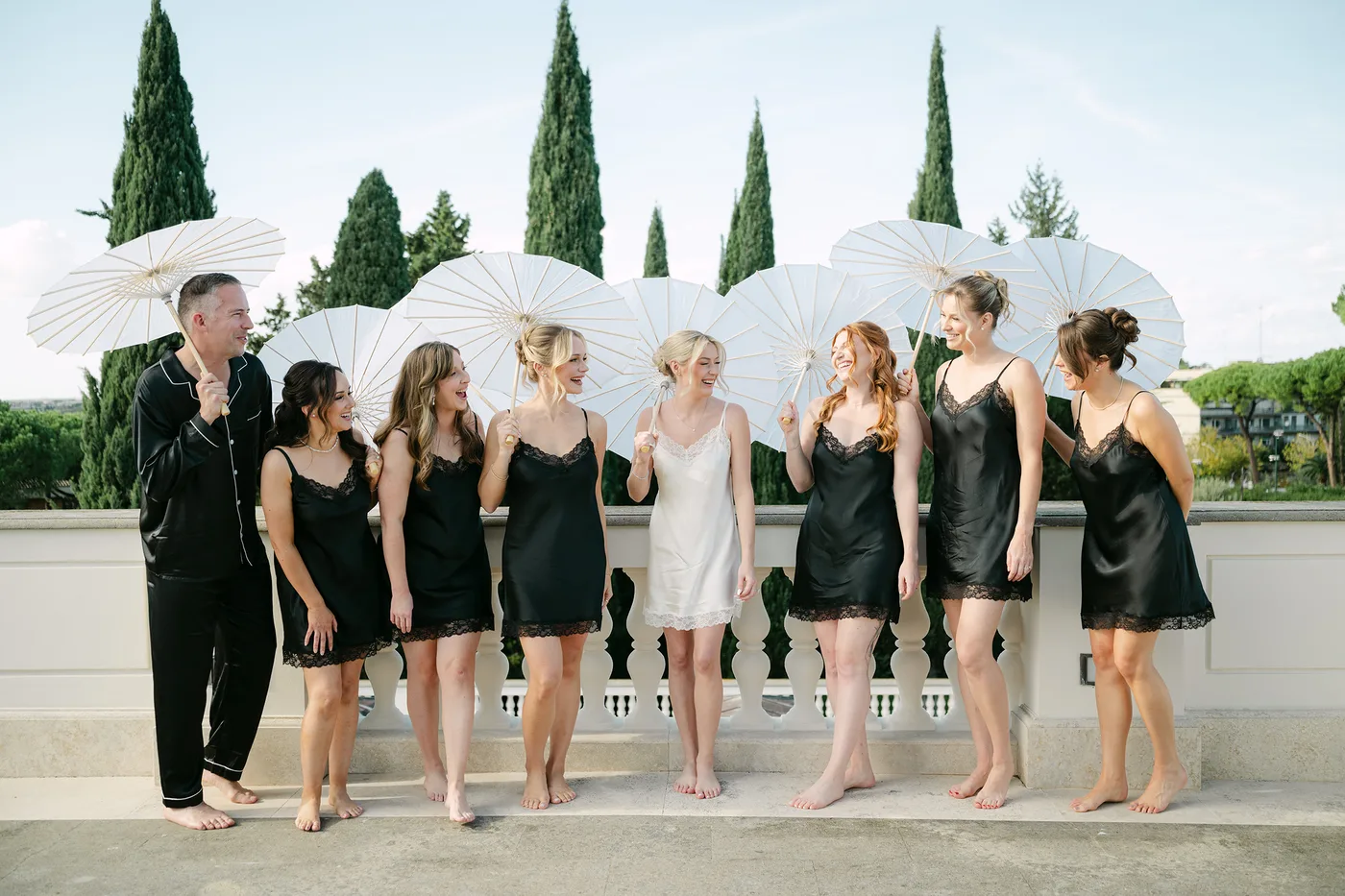
In the wedding I filmed, the bride got ready at the villa while the groom prepared at a separate location. Having a second videographer made it possible to cover both preparations without missing important moments. The bride’s room was also bright and spacious, making it a comfortable setting to film the morning.
The Ceremony: What to Know
Plan your ceremony coverage around its length and setting. In the wedding I filmed, the ceremony was held indoors and ran short, which meant staying completely focused to capture everything in a narrow window, with no second chances.
If the ceremony matters to you as a long, central moment of the film, it’s worth asking the villa a few questions early: how long your ceremony can run, what format is possible, and whether an outdoor ceremony is an option. The more I know about the ceremony in advance, the better I can plan the coverage around it.
How a Day at Villa Miani Unfolds
A wedding day here tends to follow a natural sequence, almost all of it on site. Based on the day I filmed, it looked like this:
- Bride’s preparation in a room at the villa (the groom prepared at a separate location).
- Ceremony, held indoors.
- Couple session in the enclosed garden in front of the villa.
- Aperitivo with the view over Rome.
- Dinner and speeches, with several heartfelt moments.
- The party, moving into a disco set once the speeches wrapped.
Because the settings are all within the property, the day flows without long gaps — which keeps both the guests and the film in rhythm.
Best Season and Time of Day
The best months to film at Villa Miani are May–June and September–early October, for both the quality of the light and comfortable temperatures. The single most important planning point is sunset: on an open hilltop the end-of-day light is the prize, so the couple session and key outdoor moments should be timed to it. From autumn into winter, as I’ve found on the hill, the light drops quickly and sunset comes early, so the whole timeline has to be built around it.
As a rough guide, here are approximate sunset times in Rome through the wedding season (local time, around the 15th of each month, cross-checked against an ephemeris and accurate to within a few minutes):
| Month | Sunset |
|---|---|
| March | 6:15 PM |
| April | 7:49 PM |
| May | 8:21 PM |
| June | 8:46 PM |
| July | 8:44 PM |
| August | 8:12 PM |
| September | 7:22 PM |
| October | 6:30 PM |
For a fuller view of seasons across the city, see my guide to the best time of year to get married in Rome.
What to Ask Before You Book
A few questions answered early make the whole day easier to film. Before you book Villa Miani, I’d ask the venue:
- What is the latest the celebration and music can run, given the residential setting?
- Where and how long can the ceremony be, and is an outdoor ceremony possible?
- How do the indoor halls behave for sound, and are there volume limits?
- Is drone flight permitted, and what authorizations are needed for Monte Mario?
- What are the access arrangements for suppliers, and how much parking is there?
- Is there a clear bad-weather plan, with an indoor alternative for each outdoor moment?
Is Villa Miani Right for You?
Villa Miani suits couples who want a view of Rome woven through their film, bright and current interiors, and the ease of a day that stays mostly in one place. If the panorama and the sense of being above the city are what you’re after, few venues deliver it as directly.
It may be less of a fit if your heart is set on a long outdoor ceremony, or on a venue in the historic center within walking distance of landmarks — in which case it’s worth weighing it against other wedding venues in Rome before deciding.
Frequently Asked Questions
Is Villa Miani a good wedding venue in Rome?
Yes. Villa Miani is one of Rome’s notable wedding venues, thanks to its panoramic garden over the city, its bright and spacious frescoed interiors, and the fact that almost the whole day can happen in one place. From a videographer’s point of view, it also offers real visual variety and beautiful end-of-day light.
How many guests can Villa Miani host?
Capacity depends on the layout and whether you’re seated indoors or on the terrace, so the most reliable answer is to confirm numbers directly with the villa for your specific setup.
Can you hold the ceremony at Villa Miani?
In the wedding I filmed, the ceremony was held indoors. Whether a longer or outdoor ceremony is possible is worth confirming with the venue, as it shapes how the day is planned and filmed.
Can a drone be used at a Villa Miani wedding?
Only with the proper authorizations. Monte Mario sits inside Rome’s controlled airspace, so aerial filming is possible but depends on permissions arranged in advance, and an outcome can’t be guaranteed. Aerial footage is included in my service when it’s cleared to fly.
What is the best time of year to film a wedding at Villa Miani?
May–June and September–early October offer the best light and the most comfortable temperatures. By late October the light fades early, so the timeline has to be built around an earlier sunset. For more on seasons across the city, see my guide to the best time of year to get married in Rome.
How much does a wedding videographer for Villa Miani cost?
There’s no fixed price, every quote is tailored after a short call. What changes it most is the hours of coverage, whether you want a pre-wedding film, and the number of days involved. The simplest way to get an accurate figure is to tell me about your day.
Let's Talk About Your Villa Miani Wedding
If you’re marrying at Villa Miani, I’d love to show you how I’d capture it.
You can learn more about working with me as a wedding videographer in Rome, explore what’s included in a wedding film, or check availability for your date. You can also watch a wedding film shot at a Roman castle to see how I work in Rome’s historic settings.